
See links below for updates from this year’s cohort of Urban Fellows. Learn about their placements, their interests, and all the great work they are doing!
UF Alumni Tour Socrates Sculpture Park in Long Island City
On Saturday, August 15, NYC Urban Fellows alumni enjoyed a tour of Socrates Sculpture Park in Long Island City. The park has a fascinating history as a former landfill and illegal dump site that was reclaimed and renovated in the late 1980s. We encourage you to explore their website and to visit the park, which is open year-round. You can see a few photos from our tour below… we hope you’ll join us for the next one!
If you are an alumnus of the program and would like to be informed of upcoming events hosted by the Urban Fellows Alumni Association, please send us an email or sign up here.


UF Alumni Gather for a Fort Greene Neighborhood and Park Tour
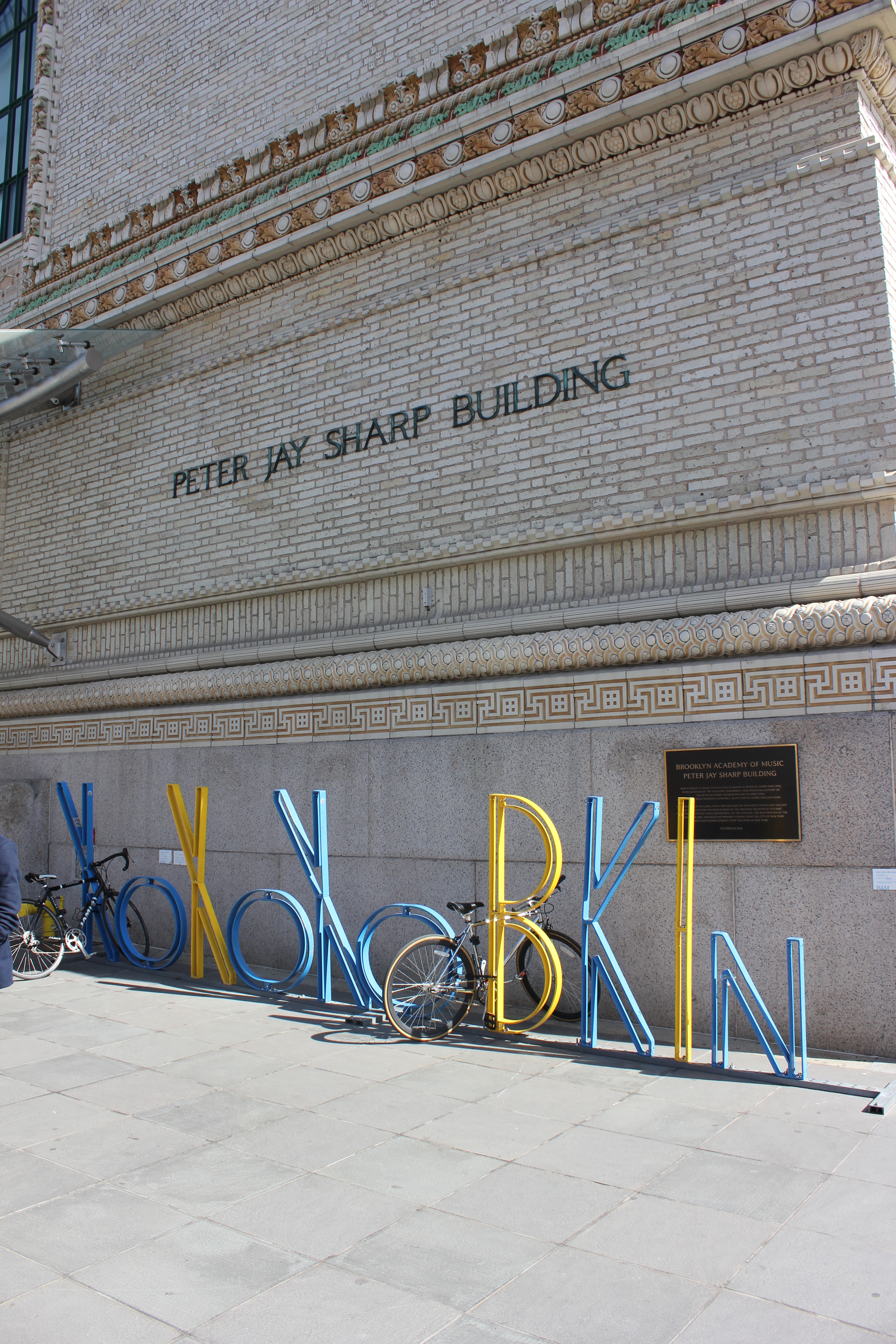
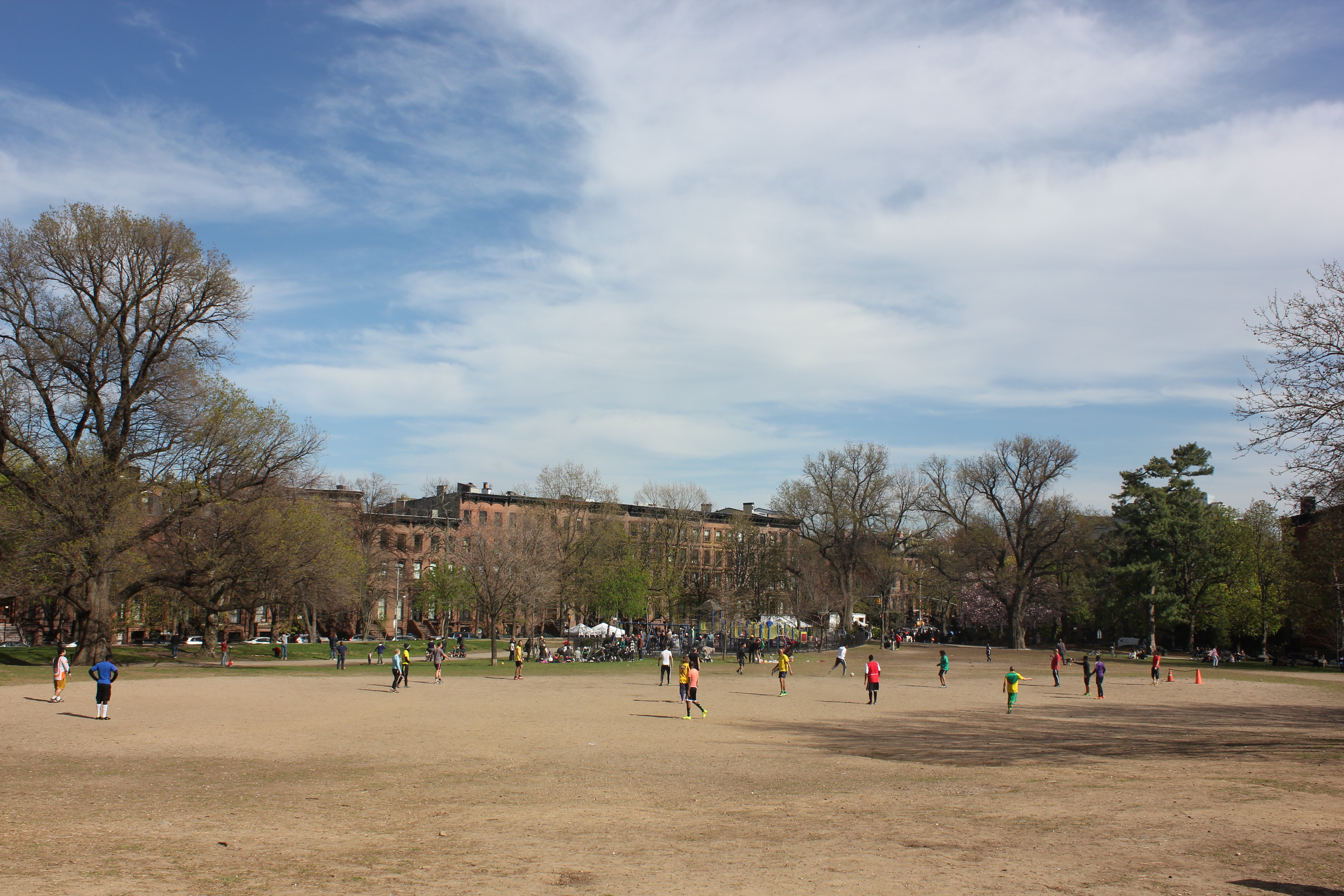
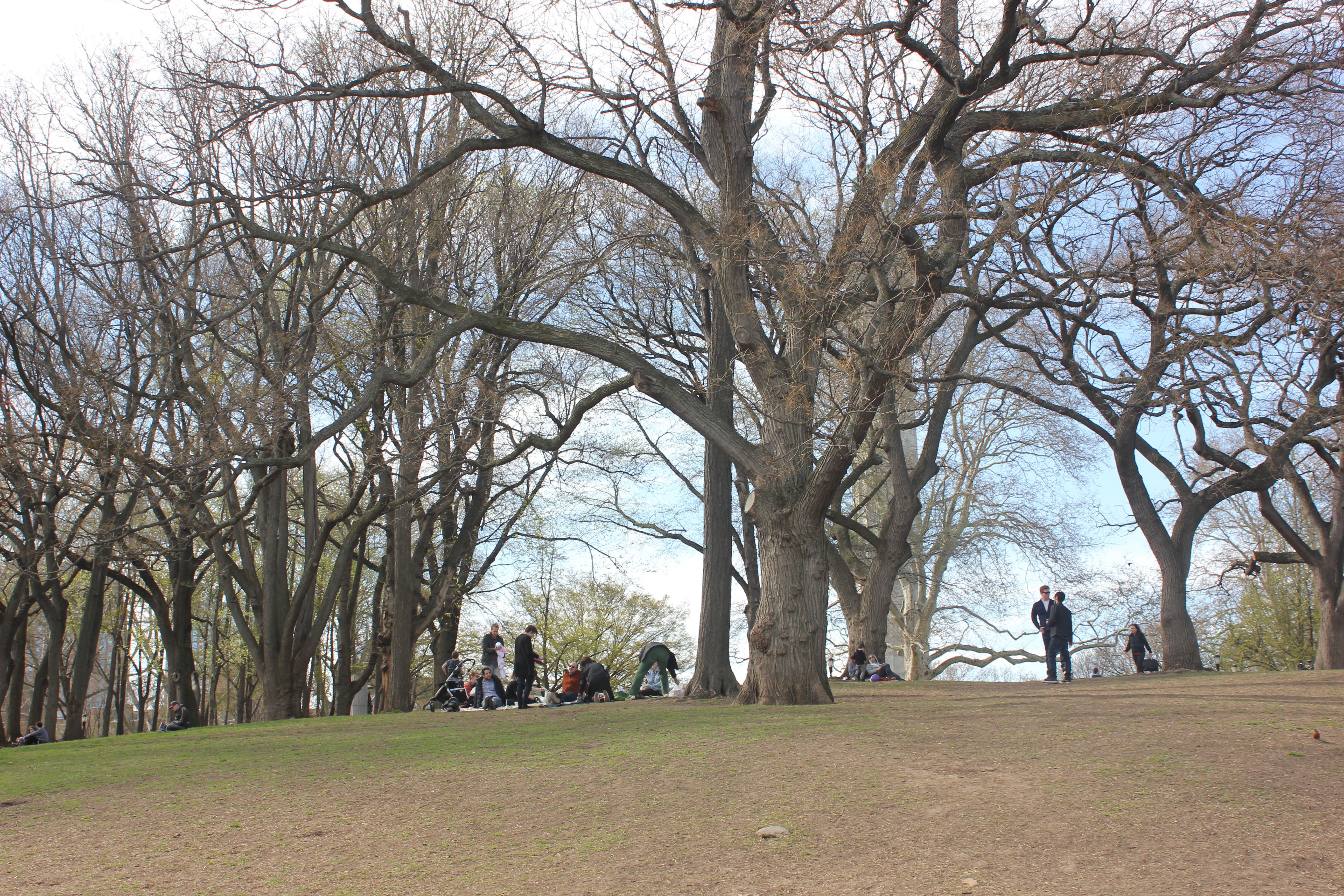
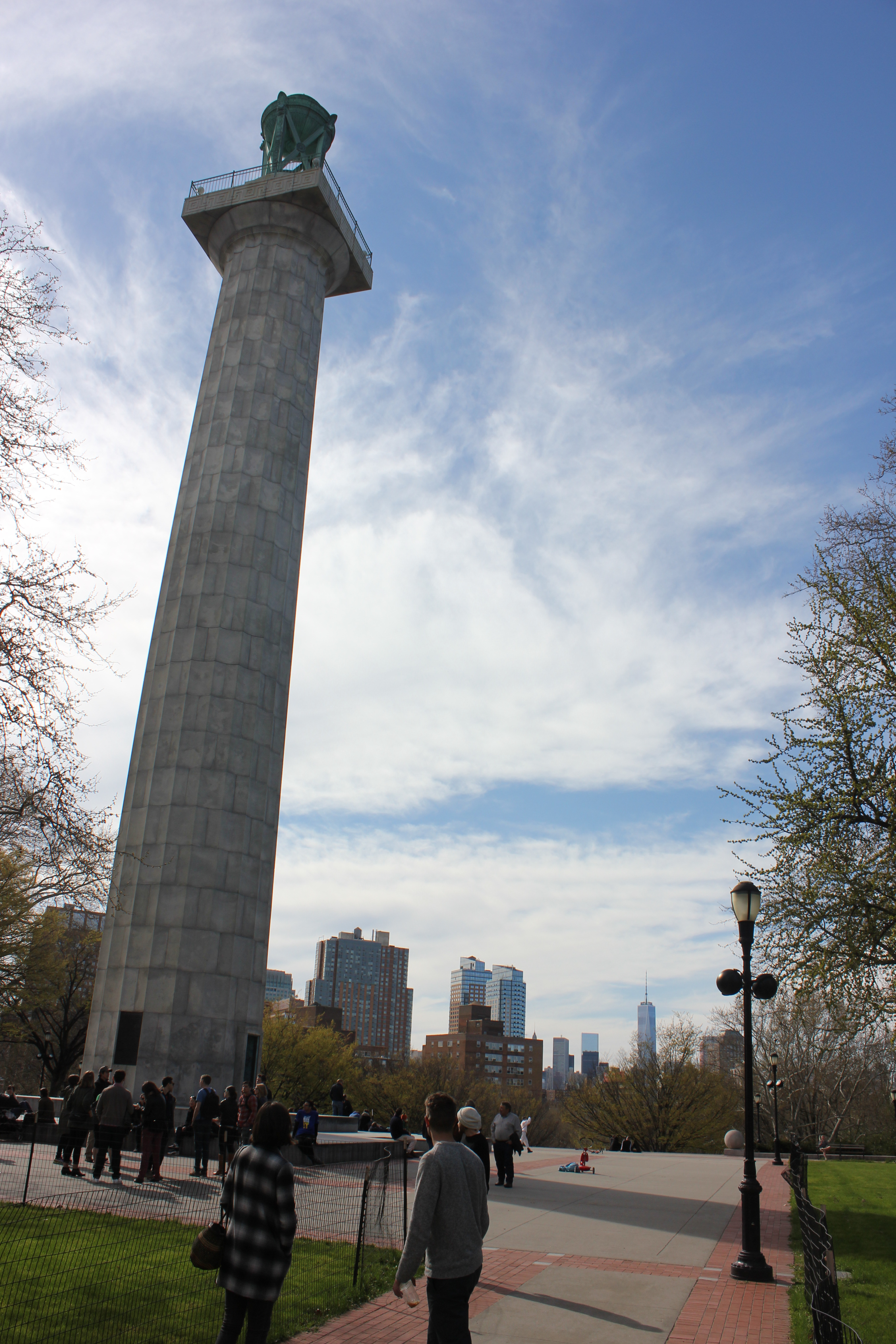
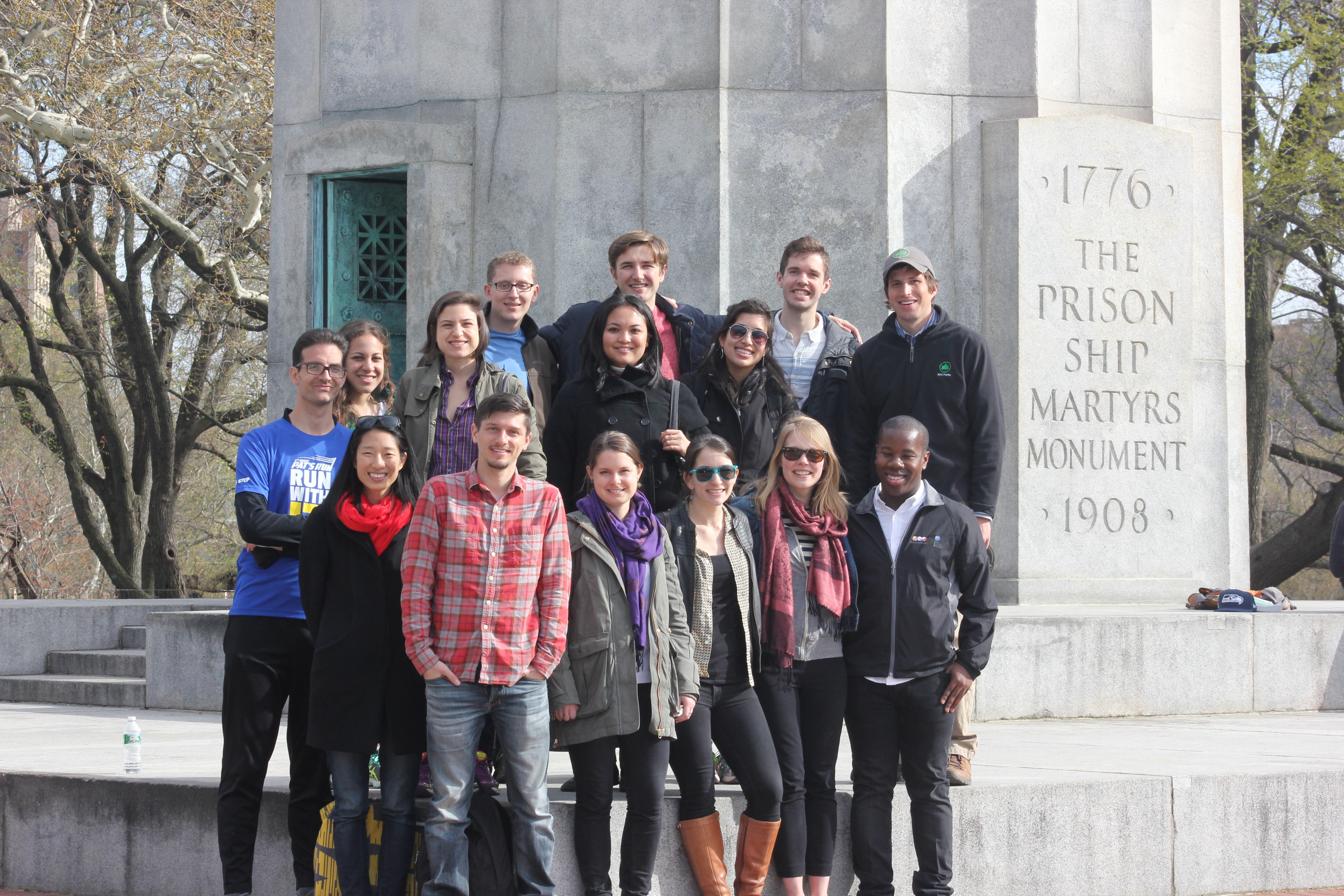
On Saturday, April 25, Urban Fellows alumni gathered for a wonderful tour of the Fort Greene neighborhood and park. Many thanks to Julie Raskin, David Barker, and Peter Birke for providing the historical background, entertaining stories, and unique insights into the evolution of both the park and neighborhood. We’ve included a few featured photos from the event, below. If you would like to receive updates and information about future events hosted by the Urban Fellows Alumni Association, please sign up on our contact page.
UF Alumni Gather In Sunny San Francisco
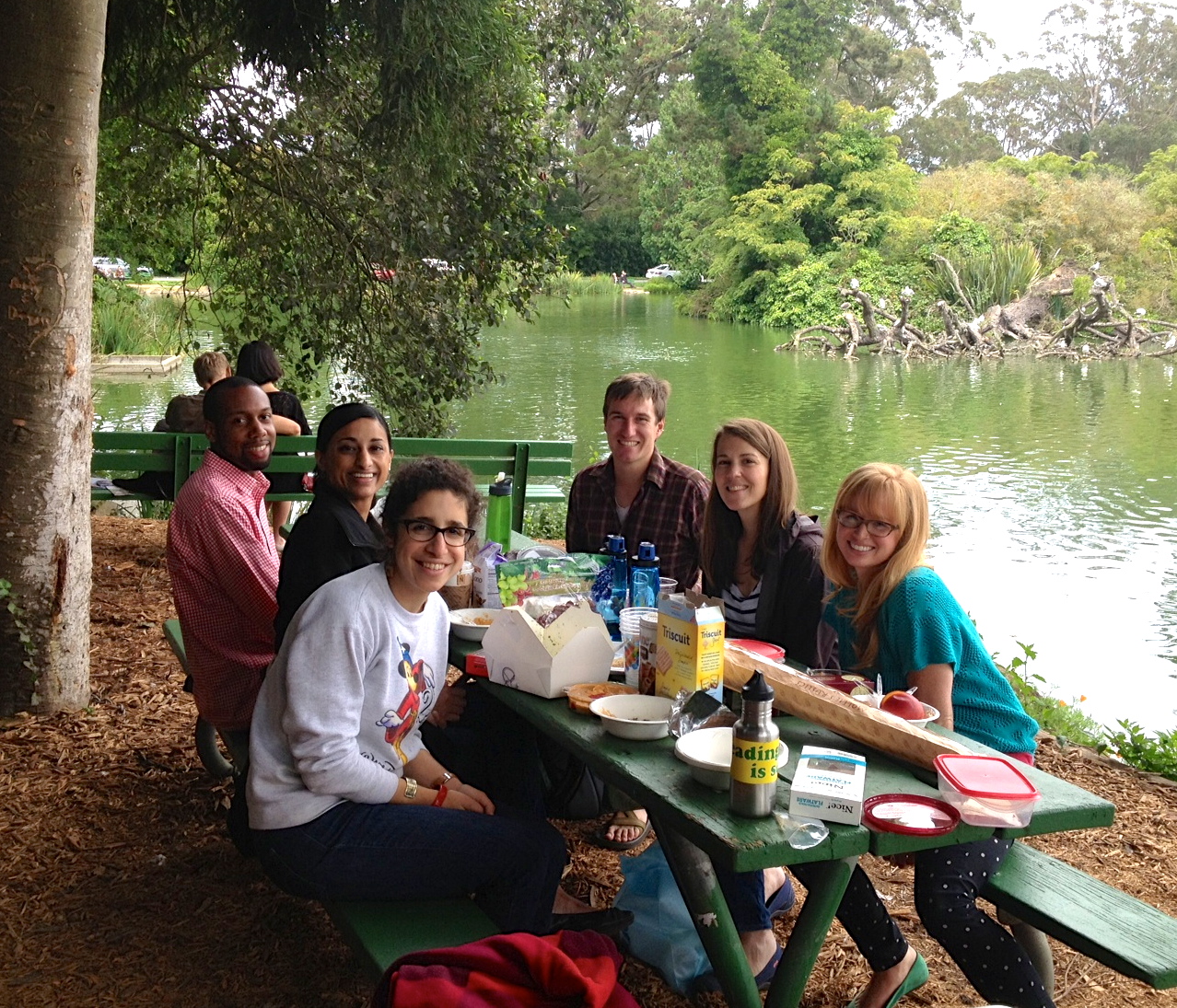
Urban Fellows alumni gathered with City Hall Fellows for a picnic in Golden Gate Park on Saturday, August 17, 2013. We made new contacts and celebrated Reynold Graham’s (2013) recent graduation from the Greenlining Leadership Academy. San Francisco based alumni Vishali Singal (2005) and Vicki Johnson (2002) are planning more events this fall, so stay tuned! If you are in the San Francisco Bay Area and would like to receive information on Bay Area events, please contact us.
UF Alums Explore the Unexpected Careers of the Government Technologist
A group of Urban Fellow alumni gathered at Animoto, a tech start-up with an amazing space located in downtown Manhattan, for an inspiring panel and discussion on New York City government and technology on July 24. Willy Wong, Chief Creative Officer of NYC & Company moderated the panel, which featured the following inspiring panelists: Sarah Haas, Executive Director, Special Projects & Policy, New York City HRA; Nicholas O’Brien, Chief of Staff, Mayor’s Office of Data Analytics; and Lynn Seirup, Director, Public Safety GIS Data Development Center, OEM.
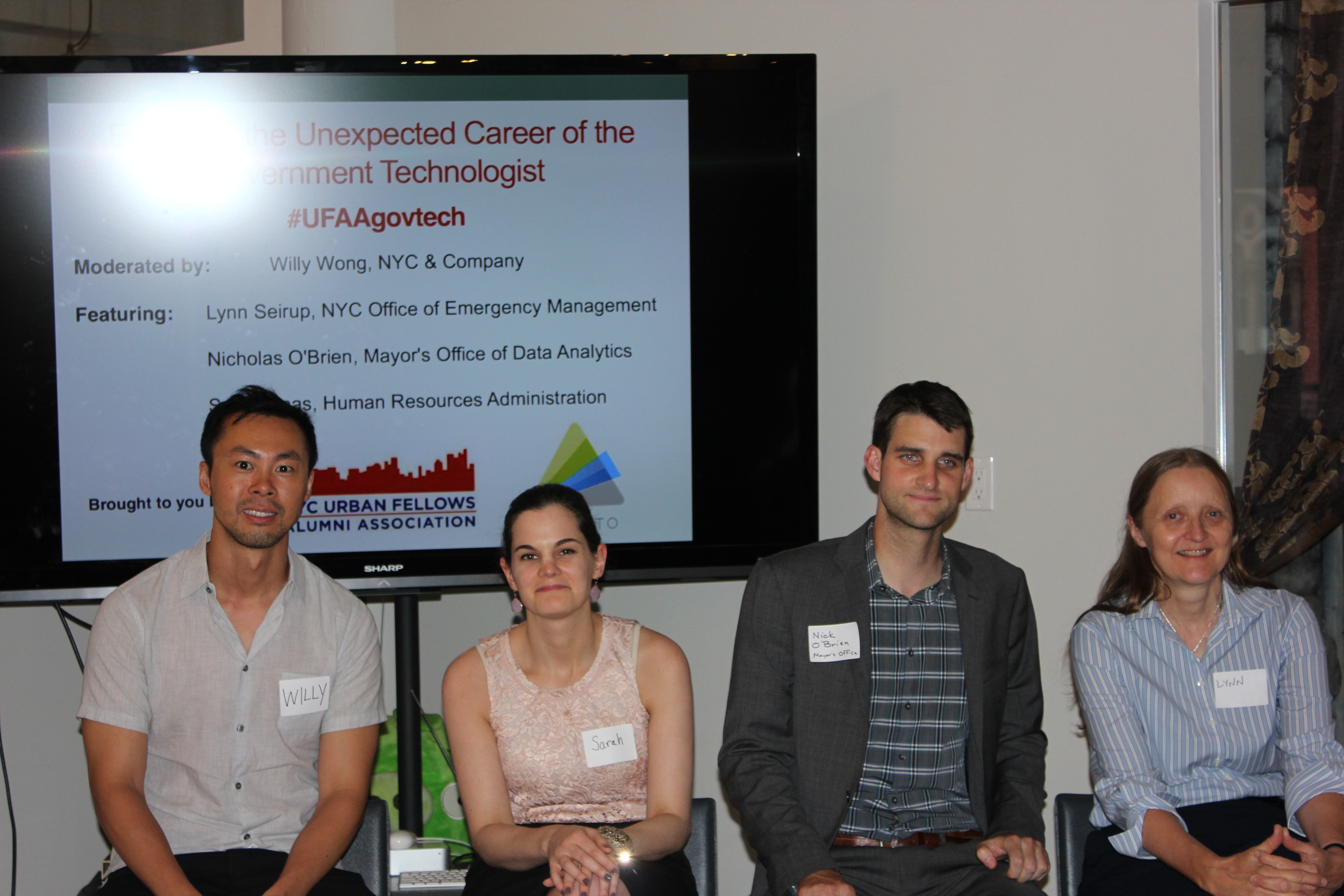 From left to right: Willy Wong, Sarah Haas, Nicholas O’Brien, and Lynn Seirup
An engaging conversation and information exchange ensued between the panelists, moderator, and attendees. The panelists gave insight into the history and development of their careers, and offered helpful advice to alumni starting out in their careers. After such a great success, UFAA hopes to offer similar events in the future!
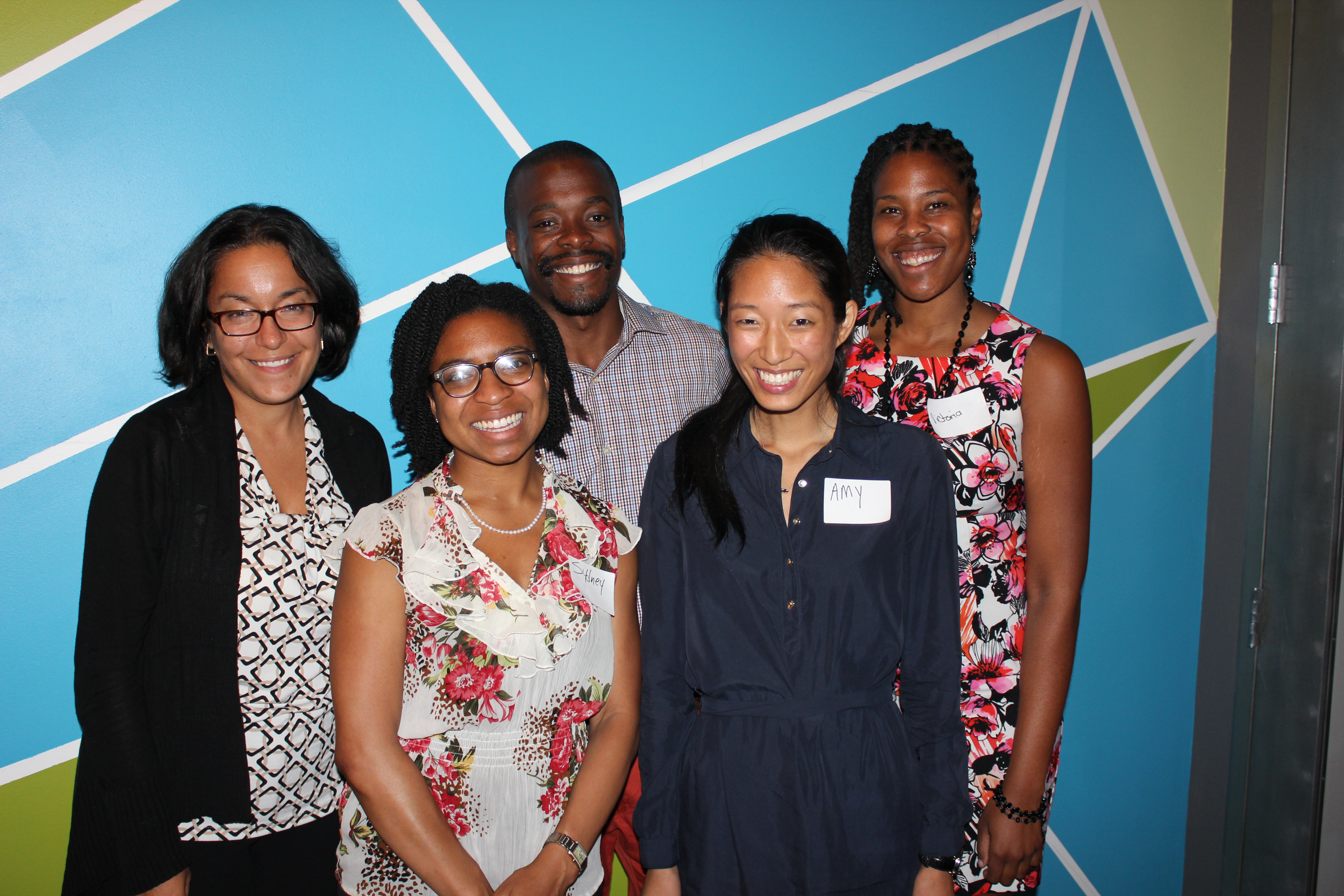 UF alums mingle at the event.
Hanging with “the Healer”: Alumna Jodi Kantor’s Peek Into the Obama White House
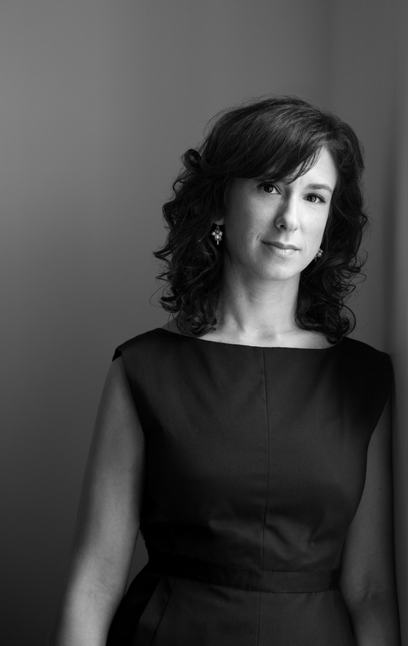
Journalist and author, Jodi Kantor (UF Class of 1998), spoke in a thoughtful but casual way with a group of current Urban Fellows and alumni at a breakfast session on December 7th at the law offices of Jenner & Block in Midtown Manhattan. The main topic was her acclaimed new book, “The Obamas,” published in 2012.
Jodi became the Arts & Leisure Editor of the New York Times in 2002 when she was only 27, but moved to covering politics for the Times starting in 2007. The book is a narrative of her years covering the President and the First Lady, and includes details provided in numerous interviews with White House insiders. In addition to covering the 2008 election, Jodi interviewed the first couple in the Oval Office for a 2009 article for the Times Magazine. She also wrote some of the earliest articles about Michelle Obama.
During her time with the alumni. Jodi shared some inside baseball – or rather some inside-the-White-House – observations as she responded to questions.
Jodi confided that Barack Obama hates politics, and that intense dislike is a thread that is weaved throughout his life and, interestingly, his political career. As Editor in Chief of the Harvard Law Review, Obama was regarded as the “the healer” among the factions that naturally arise in an environment like that. But in the negotiations with Congress over the past four years “he has to play his side of the net.” She added, however, “he has improved” in that regard.
As for the political ambitions of Michelle Obama, Jodi commented that she “would eat my own book if Michele Obama entered politics.”
She also said that the President had a great deal of difficulty hiding his disdain for Mitt Romney, and the TV coverage of the debates betrayed that.
Overall, Jodi felt that because the Obamas were from Chicago, and not from inside the Washington beltway, they were “very real people” and an “interesting couple.”
Jodi was asked what impact the Urban Fellow program had on her life. She shared that it was through the Urban Fellows program that she met her husband, but added that “working for city government is valuable.”
Jodi graduated from Columbia and was an Urban Fellow in the Mayor’s Office of Operations. She attended Harvard Law School but left to write for the online magazine Slate in 1998, and four years later, the New York Times. She lives in Brooklyn with her family.
“The Obamas” has been well-received. A review in the Chicago Tribune said that her book was “insightful and evocative, rich with detail.” The New Yorker said “Kantor nails her story.”
Congrats to the 2012 Class of NYC Urban Fellows
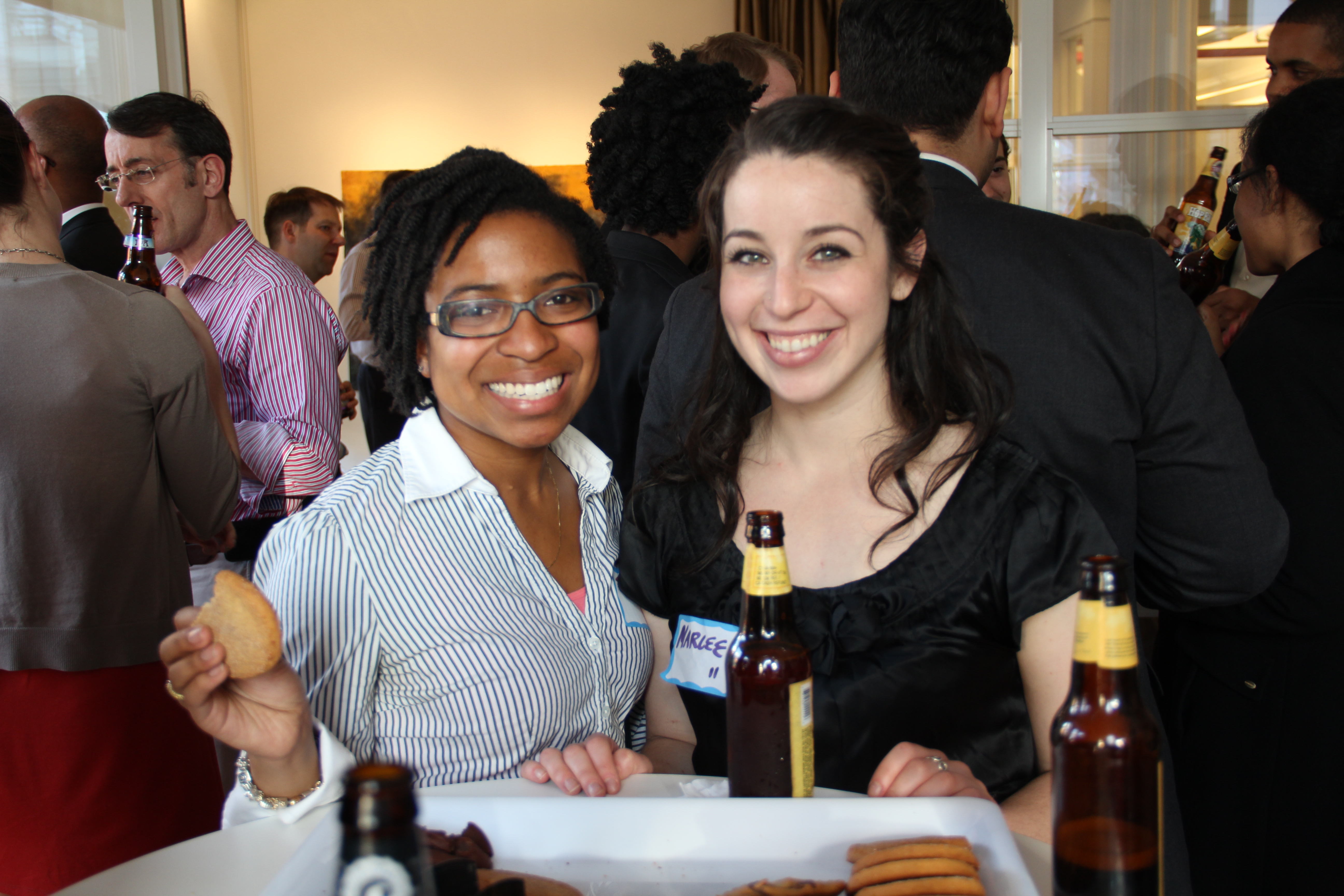 The Puck Building overlooking Houston Street in Lower Manhattan was the setting for the New York City Urban Fellow Alumni Association’s welcome reception for the Urban Fellows Class of 2012. The reception, on May 10, 2012, took place right after the recent class concluded the Urban Fellow’s program. Thus, the reception was also the induction of these new members into the Alumni Association. Welcome!
The group of 60 or so who gathered was divided almost evenly between new and “old” alumni. The beverages, graciously provided by Mustafa Hermanstyne’s Union Beer Distributors, food samplings from Vanessa’s Dumpling House, and the setting sun down West Houston Street created a perfect atmosphere for mingling among the classes. Business cards were exchanged, addresses were updated, photos taken and friendships rekindled.
Our host, Megan Golden – UF Class of 1988 and a Fellow at the NYU Wagner School of Public Service – welcomed the group to Wagner’s offices at the Puck Building. Caroline Kretz (UF 86) spoke briefly to the group as did UF Alumni Association President, Adira Simon (UF 99). With the hope that this would be the first of many UF Alumni events, Adira encouraged the newest alumni to stay involved and regard their fellow Almuni as a resource.
The recently graduated Fellow class advised the group about the newly created Tumblr account at nycurbanfellows.tumblr.com.
The newest alumni seemed glad to be gathering with their class Fellowsthey had spent so much time with over the previous nine months. Many looked like they were continuing the evening elsewhere — as they left the Puck Building engrossed in conversation, with smiles, laughter and arms full of left-over beer.
Celebrating 40 Years of Urban Fellows
The Urban Fellows Program, begun in 1969, is celebrating its 40th anniversary.
The idea was fairly simple: Take a group of bright and energetic recent college graduates, assign them to work with high-level New York City officials, and expose them to the joys (and frustrations) of municipal government. The year was 1969, and idealism about public service was in the air, when an assistant city administrator, Sigmund G. Ginsburg, part of a team of young aides to Mayor John V. Lindsay, invented the Urban Fellows program.
This evening, Mayor Michael R. Bloomberg, the sixth mayor to make use of the fellows, will honor the 40th anniversary of the program in a reception at Gracie Mansion.
Some 900 Urban Fellows — about 25 a year — have passed through the program. Applicants must have graduated from college within two years of the start of the fellowship, which runs from September to May. Many Urban Fellows end up staying in, or returning to, city government. Among the alumni who now serve in the Bloomberg administration are Linda I. Gibbs, deputy mayor for health and human services (class of 1985-86); Robert W. Walsh, commissioner of the Department of Small Business Services (class of 1981-82); and Jeanne B. Mullgrav, commissioner of the Department of Youth and Community Development (class of 1984-85).
City Room asked several former Urban Fellows to reminisce on the program and what it meant for them. Descriptions of their accomplishments, and excerpts from their responses, follow.
Andrea J. Berger (Class of 1973-74)
Ms. Berger, a senior counsel in the city’s Law Department, took a year off from her undergraduate studies at Harvard to be an Urban Fellow in an office called the Project Management Staff, part of the Bureau of the Budget (now the Office of Management and Budget). She writes:
I arrived in New York City in September 1973 with a sense of excitement and anticipation (being all of 20 years old). It was the end of the Lindsay administration and the beginning of the Beame administration, and we were 20 people from very different backgrounds from across the country. I worked on numerous interagency projects, some of which have had a permanent impact on the City’s political or urban planning landscape, such as the Fulton Mall implementation project. I worked with young professionals who had M.B.A.’s or planning degrees — they all worked hard, they were all jazzed about this government work. Having been an urban studies/sociology major at Harvard, this was right up my alley. As a result, when the fellowship ended, I went into an evening graduate degree program at N.Y.U., and received a master’s in public administration in 1978. Focusing on criminal justice issues in that program, I then worked in several such agencies from 1975 through 1980, including the Manhattan district attorney’s office, the office of the criminal justice coordinator (Nicholas Scoppetta) and, finally, the Police Department, where I first was a project manager in the first deputy police commissioner’s officer and then the personnel officer of the Communications Division (“911″) — the first female civilian to have that job.
I then went to law school at Fordham. After a few years at private law firms, I returned to government in 1987 — to the New York City Law Department. May 18 will mark my 22nd year in the Division of Legal Counsel, where I draft and review legislation, agency rules and advisory opinions. We also counsel agencies and staff at City Hall (formal and informal opinions). Much of my work is with criminal justice issues, as well as ethics, occupational safety and health, personnel and labor matters.
My job is the perfect nexus between law and policy: the very things that interested me when I arrived in New York City almost 36 years ago. I have never been bored at this job, where I work with the smartest and most honorable people with whom one could hope to work. Simply stated: the Urban Fellowship started me on this path, for which I am forever grateful.
Elizabeth H. Berger (Class of 1982-83)
Ms. Berger, the president of the Downtown Alliance since 2007, worked for Mayor Edward I. Koch’s legislative representative to the City Council during her fellowship and then went on to a long career in government relations and strategic planning. She writes:
My first day on the job I was sent to cover a City Council hearing. It was long, the issue was arcane and the debate somewhat tedious. Having been out too late the night before, I fell asleep. Seconds, or perhaps hours passed, until I was shaken awake by a man whom I later realized was the chairman of the Education Committee, Councilman Herb Berman. He asked me what was going on, and of course I hadn’t a clue. It was not a good conversation, and I was mortified that my supervisor, Martha Hirst (now commissioner of the Department of Citywide Administrative Services, and in charge of the fellows program) would find out, and that my days as a fellow would be over before they really began. Frantic to save my job — I had just signed a lease for a rent-stabilized apartment a few blocks from City Hall — I quickly asked the reporters seated near me what was going on. They threw over the committee report and some testimony.
Herb and I later became great friends, and Martha, if she knew, never let on, though perhaps as retribution assigned me to cover hundreds, if not thousands, of Council hearings in the 7½ years we worked together. Here’s what I learned that day and through the nine-month program: pay attention; knowledge is power; always read the documents; a good night’s sleep is important; and, when all else fails, ask a reporter: They know as many answers as questions. This is the advice I still give young people who want to work in government and which I follow myself (except the good night’s sleep).
Carol Fisler (Class of 1977-78)
Ms. Fisler is director of mental health court programs at the Center for Court Innovation. As an Urban Fellow, she worked in the Department of City Planning, researching and drafting large portions of a charter-mandated annual report on the capital needs and priorities of the city. She wrote:
First, I had no particular interest in living in New York City when I applied for the Urban Fellows program. I had grown up in Los Angeles and the suburbs of Chicago and was planning on heading to Washington, D.C., after graduating from Harvard with a degree in sociology and a general interest in public policy and public administration. The Urban Fellows program was the first job I applied for, and the first offer I received, during my senior year of college. When I got the offer, I figured there would be no harm in accepting it and that I could always leave New York after the nine-month program was over. September of 1977 was not a very propitious time to move to New York: the city had only recently been pulled back from the brink of bankruptcy, Son of Sam had been terrorizing the city, and the blackout and ensuing looting had given the rest of the country a sense that New York was a pretty lawless place. But the Urban Fellows program was such an intensely positive experience — for the breadth of exposure that I got to all aspects of city government and for the built-in social network with the other fellows — that I became one of these rabid adoptive New Yorkers who couldn’t imagine living anywhere else. Other than the three years I spent in law school in California, I’ve been in New York ever since. Many young people who move to New York find it compelling, of course, but I have always felt that the Urban Fellows program creates a very special and deep connection to New York’s communities and people and politics that other entry-level jobs just can’t match.
Second, I had assumed when I was graduating from college that the logical short-term career path for me was in the federal government or the federally funded consulting industry. The Urban Fellows program, with its broad exposure to all aspects of city government, showed me very early on that all the real action (and the fun and the challenges) is at the local government level. At the federal level, policies are set by legislation and regulation and funding flows to state and local governments; the work of federal agencies, unfortunately, is many, many steps removed from the people who benefit from government programs. At the local level, government workers have to make sure that the trash gets picked up, clean water flows through the taps, the streets are safe, and the parks provide respite. I developed an intense interest in local service delivery during my Urban Fellows year and have never had any interest in working at the federal level since then.
Finally, the Urban Fellows program provided us with opportunities to get to know many, many people in City government. Some of this was through the seminar program, much of it was through our individual placements at various agencies, and some of it was by hearing about, or meeting, the supervisors and colleagues of the other fellows. It was incredibly exciting — and gratifying — to see the depth of talent and passion in New York City government. Of course, we all had plenty of dealings with city employees who weren’t very smart and/or were petty bureaucrats. But I had expected that. What I hadn’t expected was that there would be so many really smart people — at all levels of government — who were deeply committed to excellence in government and delivering critical services to the residents of New York. By the end of my Urban Fellows year, I had a deep respect for much of the city government work force and, especially, for its managerial ranks. I stayed in city government for a year following the fellowship, then went to law school and Wall Street. But I came back to city government from 1986 to 1994 knowing, based on my experiences as an Urban Fellow, that I would be working with many top-notch people whose intellect and work ethic matched or exceeded that of a lot of my Ivy League classmates and Wall Street colleagues.
William Keller (Class of 1978-79)
Mr. Keller is vice president for finance and administration at Kingsborough Community College in Brooklyn. As an Urban Fellow, he worked for the Mayor’s Office of Operations, which was created after the fiscal crisis to help government be more effective. As an executive assistant to the deputy director for organization and management development, he recommended ways to reorganize the supervisory structures of city agencies in the wake of the massive staff layoffs that occurred during the crisis. He writes:
As an Urban Fellow in the Mayor’s Office of Operations, I worked with many executives on-loan from the private sector. I learned how private sector management practices could be successfully applied to the immense challenges facing New York City’s government, particularly at a time of major fiscal stress. I also saw that the private sector had no monopoly on management expertise and that many New York City managers were highly skilled managers capable of leading their agencies/departments in very difficult times. It was also intriguing that many of the on-loan executives felt that their time in New York City government was very fulfilling on a professional and personal basis. Several of the most senior executives wished that they could afford to work in the public sector rather than returning to their companies.
Partly as a result of this experience, I have moved between the public and private sectors throughout my career. My private sector jobs included: management consultant in the public sector practice of Deloitte Consulting; chief administrative officer of the Municipal Finance Division of Lehman Brothers; and public sector technology analyst and consultant with Gartner Inc. In each job, I further developed my knowledge of how best to meet the management challenges facing New York City’s government.
As a public sector manager, I have served as the chief operating officer of Metropolitan Hospital Center (a part of the New York City Health and Hospitals Corporation), deputy commissioner of the department of information technology and telecommunication, and vice president for finance and administration of Kingsborough Community College (a part of CUNY).
In each of these public- and private-sector positions, I have applied the management skills I began to develop as a New York City Urban Fellow to help improve the management of major New York City agencies. My Urban Fellowship provided a great starting point for what, thus far, has been a very fulfilling career.
Dan A. Polster (Class of 1972-73)
Judge Dan A. Polster sits on the United States District Court for the Northern District of Ohio, in Cleveland. He was an Urban Fellow after graduating from Harvard College and before attending Harvard Law School. He worked in the Department of Consumer Affairs under the commissioner at the time, Bess Myerson, and his supervisor, Bruce C. Ratner, now a leading New York developer. Judge Polster writes:
My year as an Urban Fellow was critical to shaping my career path. I had planned on attending law school, but in the early ’70s everyone was going to law school: those who wanted to become lawyers, and those who had no clear idea what they wanted to do. I thought it made sense to take a year off and do something law related to verify that I truly wanted to be an attorney. I was fortunate to get an Urban Fellowship, and particularly lucky to land the placement at Consumer Affairs. I worked with a number of young, energetic, and talented attorneys and professionals. My experiences ranged from helping in traditional consumer fraud investigations, assisting in drafting proposed regulations, and posing as one-half of an engaged couple purchasing a diamond ring from a merchant we suspected was selling painted diamonds. I ended up testifying as a key witness in the trial of the merchant the following year. I even went undercover for a week as stock boy at a Fifth Avenue retail store, and developed the evidence that led to the conviction of the proprietor for pulling a $5,000 scam on an elderly customer.
My year as an Urban Fellow not only reaffirmed my decision to become a lawyer, but it triggered a desire to use my talents in the public sector. I sought and obtained a position with the Department of Justice when I graduated from law school in 1976, and served for 22 years as a trial attorney, first in the antitrust division and then in the U.S. attorney’s office, specializing in white collar crime and corruption cases. I was appointed a federal trial judge by President Clinton in 1998.
Gene Russianoff (Class of 1976-77)
Mr. Russianoff, staff attorney for the Straphangers Campaign of the New York Public Interest Research Group, is a longtime advocate for transit riders. As an Urban Fellow, he was a special assistant to Dr. John L.S. Holloman, the president of the Health and Hospitals Corporation, writing speeches and helping him battle the administration of Mayor Abraham D. Beame on health care policy during the city’s fiscal crisis. He writes:
To put it in context: I was an Urban Fellow during what was supposed to be my third year of law school. I had to take a break. Being a law student was like being an extra in the movie “Invasion of the Body Snatchers”: by night my fellow law students would discuss their interest in public service, by day they would dress up in three-piece suits and freshly pleated skirts and go to interview at corporate law firms. I needed a different atmosphere to maintain the New Deal sentiments I had inherited from my parents.
In any event, as an Urban Fellow, I learned that there are a lot of good people in government trying to do the best they can under many constraints. While those constraints weren’t for me, from outside I could help create countervailing pressure through organizing and advocacy.
 NYC Urban Fellows Alumni Association